Water damage? Don't wait.
Call (855) 529-0071 — 24/7 emergency help across 17 states. Free inspection, written scope.
Blog
Home » Blog » Toxic Black Mold Health Risks & When to Call Pros
Few household words trigger anxiety like "black mold." Sometimes that fear is overblown — not every dark spot on a shower tile is dangerous. But sometimes it's entirely justified: certain molds, growing unchecked inside walls, under flooring, or in HVAC systems after water damage, produce compounds that genuinely harm human health. Understanding the real toxic black mold health risks — what's proven, what's exaggerated, and when a patch of mold means you need professional help — lets you respond with proportion instead of panic.
The short version: the danger isn't the color. Plenty of harmless molds look black, and some dangerous ones don't. The danger is prolonged exposure to significant mold growth, especially the species that produce mycotoxins, especially in people with vulnerabilities. Here's the full picture.
The term most people mean is *Stachybotrys chartarum*, a greenish-black mold that grows on materials with high cellulose content — drywall, wood, paper backing, ceiling tiles — that have stayed wet for an extended time. It produces mycotoxins, compounds that are toxic to humans and animals in sufficient exposure. That's the scientific basis for the fear, and it's real.
But important context: Stachybotrys is only one of many molds found in water-damaged homes, and visual identification is unreliable. Aspergillus, Penicillium, Cladosporium, and Alternaria species also colonize damp buildings, and several produce their own mycotoxins or trigger strong allergic responses. A mold colony's color tells you almost nothing about its species — lab testing is the only way to know what's growing. What matters practically isn't the Latin name; it's the extent of growth, the duration of exposure, and who's breathing it.
Stachybotrys has one telling trait: it needs sustained wetness to thrive. Finding it means something in your home has been wet for a long time — a slow plumbing leak inside a wall in an Atlanta condo, a roof leak dripping into an attic in Seattle's rainy season, floodwater that wicked into drywall and never properly dried. That's why mold discovery should always trigger a search for the moisture source, not just the mold itself. Kill the mold without fixing the water, and it comes back.
Mold affects people through three main mechanisms, and the toxic black mold health risks span all three:
Allergic reactions. The most common response. Mold spores are potent allergens — sneezing, runny nose, itchy eyes, skin rashes, and worsened asthma. People with mold allergies can react strongly to even moderate exposure, and sensitization can develop over time: you tolerate it for months, then suddenly you don't.
Irritant effects. Mold spores, fragments, and the microbial volatile organic compounds (mVOCs) mold releases — that musty "mold smell" — irritate eyes, nose, throat, and lungs in people with no allergy at all. Headaches, throat irritation, coughing, and a general feeling of being unwell in the house are classic irritant patterns, especially in enclosed, poorly ventilated spaces.
Mycotoxin effects. This is the "toxic" in toxic black mold. Mycotoxins from species like Stachybotrys can cause more serious effects with significant, prolonged exposure: persistent respiratory problems, immune system effects, and in the most severe documented cases — primarily in heavily contaminated agricultural or occupational settings — serious lung conditions. In residential settings, the documented severe outcomes are rarer, but chronic exposure in a heavily contaminated home is not something to gamble with, particularly for vulnerable people.
One myth to clear up: mold doesn't typically cause the dramatic "toxic mold poisoning" of internet legend in ordinary homes. But dismissing all concern because the scariest claims are exaggerated is equally wrong. The well-documented middle ground — chronic respiratory irritation, worsened asthma, persistent allergy symptoms, and real risk for vulnerable individuals — is reason enough to act.
Mold-related illness often disguises itself as something else — "a cold that won't quit," "allergies acting up," "the kids are always congested." Patterns that suggest mold rather than a passing bug:
If multiple household members develop similar symptoms on the same timeline, take the environment seriously as a suspect. And if anyone develops difficulty breathing, that calls for prompt medical attention regardless of suspected cause.
As with sewage backup health risks, the same exposure hits different people very differently:
If anyone in these groups lives in the home, your threshold for calling professionals should be much lower.
Mold needs three things: moisture, food (organic material), and time. Water damage provides all three generously. The growth you see is often a fraction of what's there:
This hidden-growth reality is why a surface patch of mold often signals a bigger problem behind it — and why proper mold remediation includes finding the moisture source and the full extent of growth, not just wiping what's visible.
Small, surface-level mold on hard, non-porous materials — a patch on bathroom tile grout, a spot on a window frame from condensation — is genuinely manageable yourself: fix the moisture (ventilation, a leak), scrub with detergent, dry thoroughly. That's housekeeping, not remediation.
Call professionals when any of these apply:
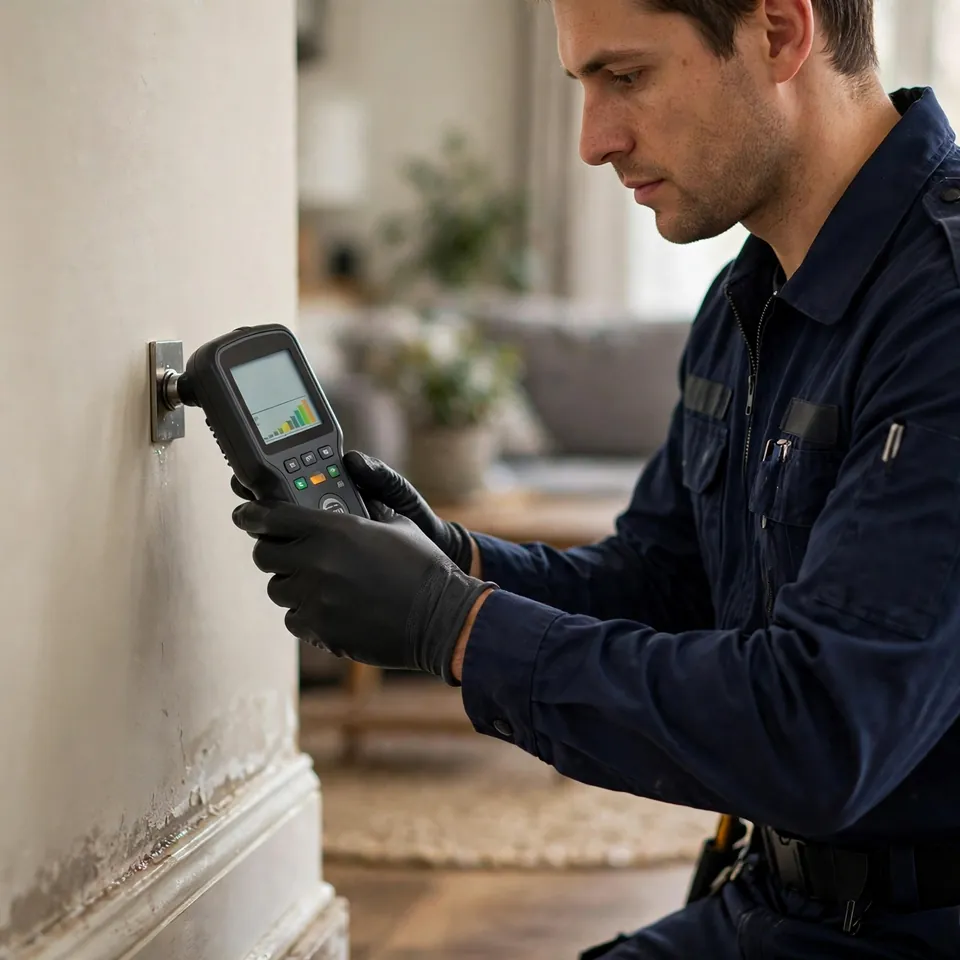
Professional remediation follows a defined process: containment of the work area under negative air pressure, HEPA-filtered air scrubbing, removal of colonized porous materials (drywall, insulation, carpet), HEPA vacuuming and antimicrobial treatment of remaining structure, fixing the moisture source, and post-remediation verification. Wiping mold with bleach and painting over it achieves none of this — bleach doesn't kill mold roots in porous materials, and paint seals moisture in.
Here's the mistake that wastes more money than any other in mold situations: remediating the mold without fixing the water. Mold is a symptom; moisture is the disease. Common sources people miss:
A proper mold job starts with moisture mapping to find every wet area, because every wet area is either growing mold now or about to.
| Scenario | Typical Cost Range | What's Involved |
|---|---|---|
| Small surface mold, DIY-appropriate | $20–$100 in supplies | Cleaning, fixing minor moisture source |
| Professional remediation, single room | $500–$3,000 | Containment, removal, treatment, drying |
| Whole-area remediation after undried flooding | $5,000–$15,000+ | Extensive removal, structural drying, rebuild |
| Medical costs of prolonged exposure | Highly variable — doctor visits, asthma medication, lost work | Avoidable with early action |
| Waiting 6 months "to see if it gets worse" | Adds thousands | It gets worse; colonization spreads, more material must be removed |
Mold doesn't stabilize — it expands as long as moisture persists. Every month of delay converts a contained remediation into a larger one.
Water Damage Cleanup Now connects you with local mold remediation crews 24/7 — teams that find the moisture source, contain the growth, remove what's colonized, and dry the structure so it doesn't come back. If you're looking at mold right now, or smelling it, call (855) 529-0071 and get an expert assessment on the way.
Good to know
The most common symptoms are allergic and irritant: chronic sneezing, nasal congestion, itchy or watery eyes, coughing, throat irritation, headaches, skin rashes, and worsened asthma. With heavy, prolonged exposure to mycotoxin-producing molds, more serious respiratory effects can develop. The telltale pattern is symptoms that improve away from home and return when you're back — that's your strongest clue the house is the cause.
No. Many black-colored molds are ordinary allergens, not mycotoxin producers — and color alone can't identify species. The genuinely "toxic" species like Stachybotrys chartarum are greenish-black and grow on long-wet cellulose materials like drywall. But waiting for a lab ID before acting is a mistake: significant indoor mold growth of any kind deserves remediation, because even non-toxic species trigger allergies, irritate lungs, and signal an active moisture problem.
For most healthy adults, residential mold exposure causes miserable but manageable allergic and irritant symptoms rather than severe illness. The serious-risk groups are people with asthma or chronic lung disease, the immunocompromised (risk of invasive fungal infection), children with developing lungs, and the elderly. Prolonged heavy exposure in a badly contaminated home is a genuine health hazard for anyone — which is why extensive growth always calls for professional remediation.
Mold colonization can begin within 24 to 48 hours of water exposure under warm conditions. Visible growth often takes a week or more, but it's growing invisibly before that — inside wall cavities, under flooring, in insulation. This 24-to-48-hour window is exactly why fast water extraction and verified structural drying after any water event is the most effective mold prevention there is.
Sometimes. Mold resulting from a covered sudden event — like a burst pipe — is typically covered as part of the water damage claim, including remediation costs. Mold from long-term leaks, humidity, or neglected maintenance is generally excluded. Many policies also cap mold coverage at a sublimit (often $1,000–$10,000) even when it is covered. Document the water source and act fast — see our [water damage insurance claim](/blog/water-damage-insurance-claim/) guide.
No — this is one of the most counterproductive things you can do. Paint doesn't kill mold roots embedded in drywall or wood; it traps moisture behind the coating, letting colonization continue invisibly while giving you false confidence. The mold keeps releasing spores, the structure keeps deteriorating, and the eventual remediation is bigger and more expensive. Proper remediation removes colonized materials and fixes the moisture source — there are no shortcuts. Water Damage Cleanup Now connects homeowners with local mold remediation professionals around the clock. If you're dealing with mold growth — visible or suspected — call **(855) 529-0071** any time for fast local help.
Call (855) 529-0071 — 24/7 emergency help across 17 states. Free inspection, written scope.