Water damage? Don't wait.
Call (855) 529-0071 — 24/7 emergency help across 17 states. Free inspection, written scope.
Blog
Home » Blog » Emergency Water Extraction: What Happens After You Call
Standing water in your home is a race against the clock. Every hour that water sits on your floors, inside your walls, and under your foundation gives moisture more time to destroy building materials, warp wood, and create conditions for mold growth. Emergency water extraction is the critical first phase of any water damage response — removing standing water and surface moisture as quickly as possible so structural drying and repairs can begin. Whether the water came from a burst pipe in a Chicago winter, a failed washing machine hose in Phoenix, or a flash flood in Houston, the process that follows your call is essentially the same. This guide walks you through exactly what happens after you pick up the phone, what to expect on-site, how long the work takes, and what it typically costs — so there are no surprises during one of the most stressful events a homeowner can face.
When you call Water Damage Cleanup Now at (855) 529-0071, you'll be connected with a local restoration crew in your area. The intake call is short and focused. The dispatcher will ask a few essential questions: where the water is coming from, how much standing water there is, what rooms are affected, whether the water source is still active, and whether the water is clean (supply line), gray (appliances, dishwasher), or black (sewage, floodwater). If the source is still flowing — say, a supply line feeding a burst pipe — you'll be told to shut off the main water valve immediately if you can do so safely.
Most emergency water extraction crews aim to arrive within 60 to 90 minutes in metro areas, though response times vary by location, time of day, and weather conditions. During major storm events — like a hurricane hitting the Gulf Coast or a winter storm knocking out pipes across the Midwest — crews may be handling dozens of calls, so getting your call in early matters. If you're in a flooded neighborhood in Miami after a tropical storm, every minute of delay adds to the damage.
While you wait, there are a few things you can safely do to reduce damage. Move valuable items, electronics, and documents to dry ground or upper floors. If water is near electrical outlets or the breaker panel, turn off the power to affected areas — never wade through standing water near electricity. Take photos and video of everything for your insurance claim; documentation made before extraction starts is valuable because it shows the full extent of the damage.
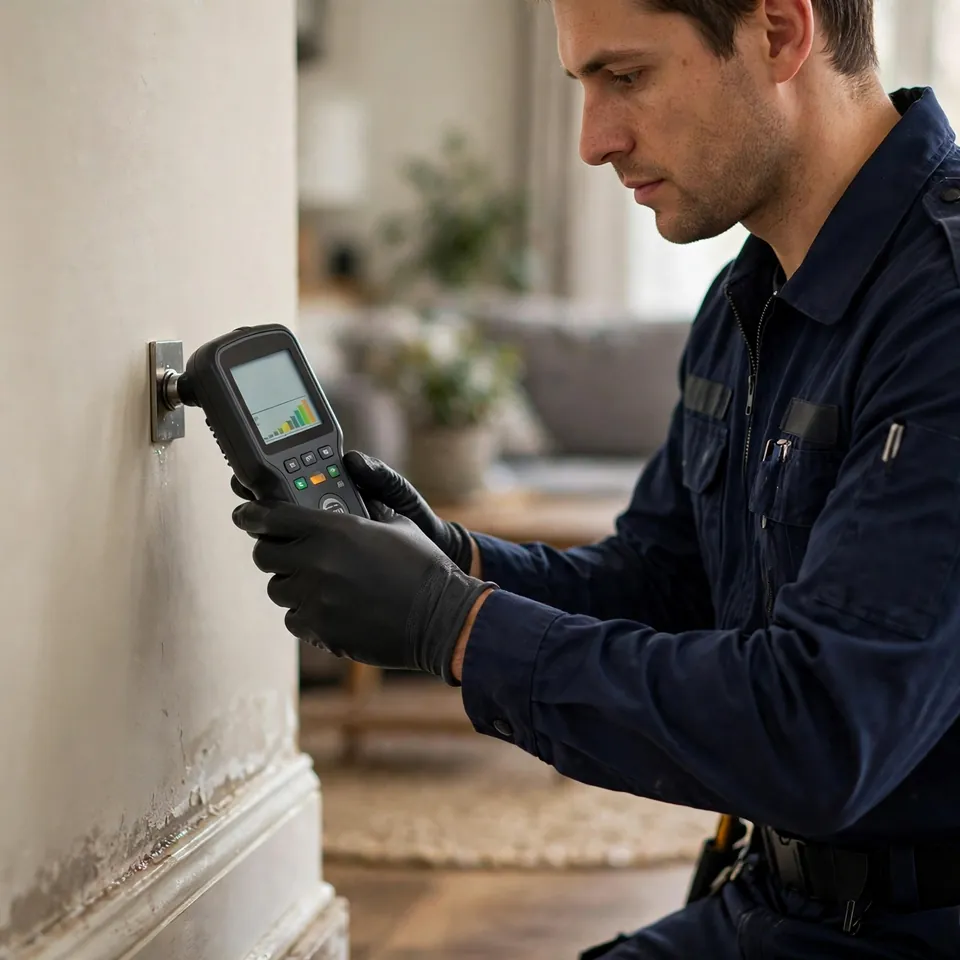
When the crew arrives, the first thing they do isn't pull out hoses — it's an assessment. A lead technician walks through the affected areas with a moisture meter and, in many cases, a thermal imaging camera to find water that's hiding behind walls, under flooring, and inside ceiling cavities. Water travels in surprising ways: a leak from an upstairs bathroom in a Denver townhouse can run down wall cavities and pool in a basement two stories below, showing up far from the origin point.
The assessment categorizes the water. Category 1 water comes from a clean source like a supply line or rainwater. Category 2 (gray water) comes from washing machines, dishwashers, or shower drains and carries contaminants. Category 3 (black water) includes sewage backups and rising floodwater, which carries pathogens and requires strict safety protocols. This classification determines the protective equipment the crew uses and whether materials like carpet padding can be salvaged or must be discarded. If sewage is involved, the job moves into sewage cleanup territory with full containment measures.
The technician also checks for structural hazards: sagging ceilings loaded with trapped water, compromised subfloors, and electrical risks. A ceiling bulging with water above a living room is dangerous — it can release dozens of gallons suddenly. The crew will puncture these carefully and drain them in a controlled way. This assessment typically takes 20 to 40 minutes and ends with a written or verbal scope of work and a cost estimate before extraction begins.
This is the core of emergency water extraction: getting the bulk water out. Crews use a combination of equipment depending on the depth and spread of the water. Portable extraction units — powerful truck-mounted or portable pump-and-vacuum systems — handle deep standing water. For water across large floor areas, technicians use weighted extraction tools: heavy wands or ride-on extractors that press into carpet and pad, squeezing water out as the vacuum pulls it up.
In homes with hard-surface flooring, squeegee wands and flood pumps move water efficiently. If water has migrated into wall cavities, crews may drill small weep holes at the base of drywall to let trapped water drain. In a typical single-room scenario — say a laundry room flooded by a burst supply hose in a Dallas home — extraction might take 45 minutes to two hours. A fully flooded basement in New Jersey after a nor'easter can take several hours, with multiple pump cycles.
Speed matters enormously here, and this is why 24-hour availability is the defining feature of a water extraction service. Porous materials like drywall, carpet padding, and insulation begin deteriorating within hours of saturation. Drywall wicks water upward like a sponge; carpet padding loses its structure and almost always needs replacement once soaked. Wood subfloors begin to swell and buckle. The faster extraction happens, the more material can be saved — which directly reduces your repair bill.
Extraction removes visible and standing water, but it doesn't remove moisture trapped inside materials. After the bulk water is gone, the crew maps remaining moisture with pin and pinless moisture meters, recording readings on walls, floors, and ceilings to establish drying goals. These readings become the baseline for the drying phase — technicians compare later readings against them to confirm when materials are back to normal levels.
Based on this map, the crew sets up structural drying equipment: industrial air movers (high-velocity fans) positioned to push dry air across wet surfaces, and dehumidifiers to pull moisture out of the air so it doesn't reabsorb into materials. This equipment placement is calculated, not random — air movers are angled at walls and floors to maximize evaporation, and dehumidifiers are sized to the cubic footage and saturation level. A flooded finished basement in Ohio might need six to eight air movers and two large dehumidifiers running for three to five days.
This is the handoff point between extraction and structural drying. The extraction crew typically leaves the drying equipment running and returns daily to check moisture readings and reposition equipment until targets are met. Homeowners are usually asked to keep the equipment running continuously and avoid turning off the dehumidifiers — interrupting the cycle adds days to the timeline.
Not everything can be dried in place. Materials that were soaked too long or that harbor contamination have to be removed. Standard tear-out includes carpet padding (almost never salvageable), baseboards, sections of drywall up to the measured water line (the "flood cut"), wet insulation, and sometimes sections of flooring. Crews cut drywall cleanly at the flood line so new drywall can be hung seamlessly during repairs.
After tear-out, affected surfaces get an antimicrobial treatment to inhibit mold growth. This step is critical: mold can begin colonizing damp drywall and wood within 24 to 48 hours of a water event. A quick extraction followed by antimicrobial application dramatically reduces the odds you'll need mold remediation weeks later. The crew also disposes of debris according to local regulations — Category 3 waste has specific handling rules.
At this point the property is dry, clean, and ready for the rebuild phase: new drywall, paint, flooring, and trim. Some restoration crews handle reconstruction in-house; others hand off to a general contractor. Either way, the emergency phase is complete once moisture readings confirm materials are dry.
Timelines vary widely by scenario. Here's a realistic breakdown:
| Scenario | Extraction Time | Total Drying Time | Typical Situation |
|---|---|---|---|
| Single room, clean water | 1–2 hours | 2–3 days | Burst supply line under a sink, caught early |
| Multiple rooms, clean water | 2–4 hours | 3–4 days | Failed washing machine hose, second-floor leak |
| Finished basement, gray water | 4–6 hours | 4–5 days | Sump pump failure during heavy rain |
| Whole-floor flood, black water | 6–10 hours | 5–7 days | Sewage backup or rising floodwater |
| Major storm/flood event | 8–12+ hours | 7–10 days | Hurricane or river flooding, whole home |
These are active work times, not calendar waits — drying equipment runs around the clock, and the calendar time reflects how long materials take to release moisture, not how long crews are on-site.
Costs depend on the water category, the square footage affected, how long the water sat, and how much material needs tear-out. Clean-water extraction from a single room is the cheapest scenario; black-water whole-home flooding with extensive tear-out is the most expensive. Emergency or after-hours dispatch can add to the base rate, and that surcharge is usually worth it — every hour of delay increases the total damage.
| Service Component | Typical Cost Range |
|---|---|
| Emergency dispatch / call-out fee | $150 – $400 |
| Water extraction (per room) | $200 – $600 |
| Structural drying equipment rental (per day) | $100 – $300 per unit |
| Carpet padding removal and replacement | $1.50 – $3.50 per sq ft |
| Drywall flood-cut removal and replacement | $3 – $7 per sq ft |
| Antimicrobial treatment | $0.50 – $2 per sq ft |
| Full-home extraction + drying (severe) | $3,000 – $8,000+ |
Homeowners insurance typically covers sudden and accidental water damage — burst pipes, appliance failures, roof leaks from storms — but usually excludes gradual leaks, neglected maintenance, and rising floodwater (which requires separate flood insurance). Document everything, keep receipts, and file your claim promptly.
Good to know
Ideally within the first few hours of the water event. Porous materials begin deteriorating within hours, and mold can start growing within 24 to 48 hours. A crew that arrives the same day and starts extraction immediately gives you the best chance of saving flooring, drywall, and belongings. This is why 24-hour availability matters — water damage doesn't wait for business hours, and neither should the response.
Usually, yes, for sudden and accidental events like burst pipes, appliance failures, and storm-driven roof leaks. Most policies exclude damage from neglected maintenance, gradual leaks, and rising floodwater (that requires separate flood insurance through the NFIP or a private carrier). Call your insurer as soon as possible, document the damage with photos before cleanup begins, and keep every receipt from the restoration crew.
For a small, clean-water spill — a tipped-over mop bucket or a minor toilet overflow caught immediately — a shop vac and towels can handle it. For anything beyond a few gallons, especially water that's been sitting, gray or black water, or water affecting walls and flooring, professional equipment makes the difference. Industrial extractors pull far more water from carpet and pad than consumer equipment, and moisture meters reveal hidden saturation you can't see.
Usually not. Extraction is loud but brief — a few hours of equipment noise. The drying phase runs industrial air movers and dehumidifiers 24/7 for several days, which is noisy and warm, and crews will need access for daily moisture checks. Some homeowners stay with family during the drying phase for comfort, but it's a personal choice, not a requirement, unless there's sewage contamination or significant mold.
Professionals verify with moisture meters, comparing current readings to baseline measurements taken before drying began and to readings from unaffected areas of the home. Drywall and wood each have target moisture levels, and drying continues until readings hit those targets — not until surfaces merely feel dry. If a crew tells you it's done without showing meter readings, that's a red flag worth questioning.
The longer water sits, the worse every outcome gets. Within hours, drywall swells and particle board disintegrates. Within a day or two, wood floors begin cupping and mold colonization starts. After several days, subfloors can rot, insulation compresses and loses effectiveness, and odors set in permanently. Delayed extraction turns a manageable cleanup into a major reconstruction project — sometimes doubling or tripling the total cost. Water won't wait, and neither should you. If you're dealing with standing water right now, call **Water Damage Cleanup Now** at **(855) 529-0071** — a local crew can be dispatched fast, any hour of the day, to start emergency water extraction and stop the damage from getting worse.
Call (855) 529-0071 — 24/7 emergency help across 17 states. Free inspection, written scope.